

Picture this: a customer places an order at 9 a.m., and by the next afternoon, it’s sitting on their doorstep. No delays, no “where’s my package” emails, no scrambling. That kind of experience isn’t luck. It’s the result of a warehousing and distribution system that actually works the way it’s supposed to.
Most businesses don’t think about warehousing until something goes wrong. A shipment gets lost. Inventory doesn’t match what’s on the shelf. Orders pile up during a busy season and nobody can figure out why the backlog keeps growing. That’s usually the moment companies realize storage isn’t just about having a building to stack boxes in. It’s about movement, accuracy, and timing, all working together.
It’s Not About the Space. It’s About the Flow.
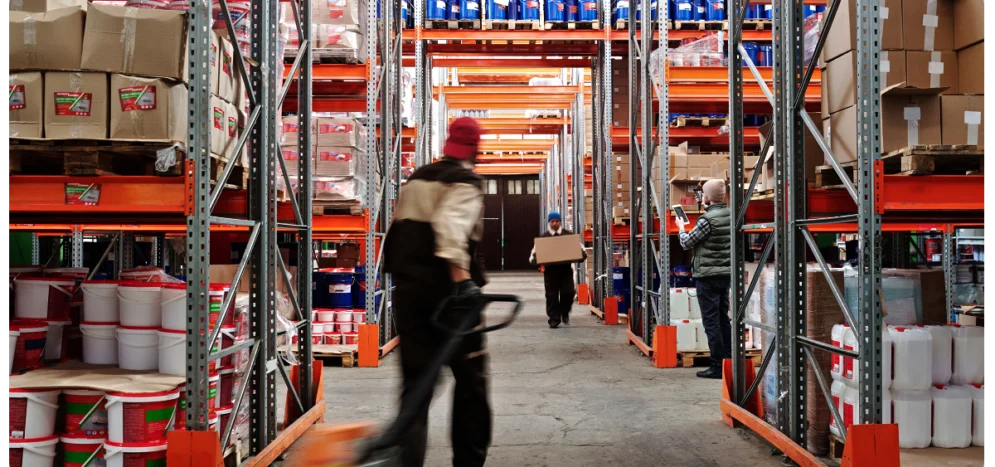
A warehouse full of neatly stacked pallets can still be a mess if nothing moves efficiently. Real warehousing and distribution is less about square footage and more about how quickly and accurately products travel from the moment they arrive to the moment they leave.
Take a mid-sized furniture retailer, for example. They had plenty of storage but no real system for tracking what was where. Every time an order came in, staff spent twenty minutes hunting for the right item in the wrong aisle. Once they switched to a properly organized distribution setup, with clear zoning and real-time inventory tracking, that twenty minutes dropped to under three. Multiply that across hundreds of daily orders, and you’re looking at hours of saved labor every single day.

Five Ways This Plays Out in Real Businesses
1. The seasonal spike nobody planned for. A small skincare brand saw orders triple during the holiday season. Without flexible warehousing support, they would’ve missed shipping deadlines and lost repeat customers. Instead, with scalable storage and a distribution partner who could absorb the surge, they shipped every order on time, and their December reviews were the best they’d ever had.
2. The manufacturer juggling multiple regions. A parts manufacturer supplying three different states was shipping everything from a single warehouse, which meant longer transit times and higher freight costs. By distributing inventory across regional hubs, delivery times dropped from five days to two, and shipping costs fell along with them.
3. The online store that kept overselling. An e-commerce shop kept selling items that were technically out of stock because their inventory system wasn’t synced with their warehouse. After integrating real-time tracking into their distribution process, the mismatch disappeared, and so did the awkward “sorry, that’s actually sold out” emails to customers.
4. The food supplier racing against time. A regional food distributor dealt with perishable goods, meaning every hour in storage mattered. A distribution setup built around fast turnaround and proper temperature-controlled handling meant products left the warehouse within hours of arrival instead of sitting around losing freshness.
5. The growing business that outgrew its own garage. A founder running a candle business out of a spare room hit a wall when order volume outpaced what she could pack and ship herself. Partnering with a warehousing service didn’t just free up her space, it freed up her time, letting her focus on product development instead of packing tape and address labels.
What Actually Makes a Distribution Partner Worth Trusting
None of this happens by accident. It comes down to a few things that sound simple but are surprisingly hard to get right: accurate inventory systems, well-organized storage layouts, reliable transportation networks, and people who actually know what they’re doing when things get busy.
This is where Dy Shipping and Logistics comes in. Rather than treating warehousing as an afterthought, the goal is to build a system where storage and distribution work together seamlessly, so businesses spend less time worrying about logistics and more time growing. Whether it’s managing seasonal surges, distributing inventory across regions, or simply making sure orders go out the door correctly and on time, the focus stays on precision and reliability rather than empty promises.
The Bottom Line
Warehousing and distribution isn’t glamorous. Nobody posts about it on social media. But it’s the quiet backbone behind every business that manages to deliver consistently, scale smoothly, and keep customers coming back. Get it wrong, and it shows up in every late shipment and frustrated email. Get it right, and it becomes invisible, which, in this business, is exactly the point.
If your current setup feels more like a bottleneck than a solution, it might be time to rethink how your products move from storage to doorstep. Dy Shipping and Logistics is built to make that shift a lot less painful.